If your house sits under pines — which describes a great deal of New Hampshire — you already know the routine. You clean the gutters in November, and by the following autumn they are packed solid again. Somewhere in year three of that cycle, most homeowners start wondering whether gutter guards are worth the money.
The honest answer is that they often are, but not for the reasons they are usually sold, and not every type performs the same way here. Here is what actually matters in this climate.
What Gutter Guards Actually Do
A gutter guard is a cover or screen that lets water into the gutter while keeping debris out. That is the entire premise. A good one reduces how often you clean your gutters and keeps them flowing through the seasons when they would otherwise clog.
What they do not do is eliminate maintenance. Any salesperson promising you will never touch your gutters again is overselling. Fine debris still accumulates on top of guards, and the gutters themselves still need checking. The realistic outcome is going from twice a year to perhaps once every couple of years, with less mess each time.
The New Hampshire Problem: Pine Needles
This is where most generic advice falls down. Guides written for other parts of the country assume the enemy is oak and maple leaves. Around here it is frequently white pine, and pine needles behave completely differently.
Leaves are large and sit on top of a screen. Needles are thin, stiff, and drop in enormous volume — they slip through wide mesh, wedge into openings, and mat together into a layer that sheds water straight over the edge. A guard that works beautifully in leaf country can fail completely under a white pine.
If you have pines over your roof, the mesh size is the single most important specification. Ask about it before anything else.
The Main Types, and How They Handle Our Conditions
Micro-mesh
A fine stainless or aluminum mesh over a frame. The openings are small enough to stop pine needles and even shingle granules, which makes this the most reliable option for wooded New Hampshire lots. It is also usually the most expensive. Debris collects on top and eventually needs brushing off, but water keeps flowing underneath in the meantime.
Screen and perforated covers
Larger openings, lower cost. Fine against leaves and twigs, considerably less so against needles, which thread through the holes and build up inside the gutter where you cannot see them. Reasonable if you have hardwoods, frustrating under pines.
Reverse curve
A solid cover that uses surface tension to pull water around a curved lip and into a slot while debris falls past. They work, but heavy downpours can overshoot the slot, and the opening itself can clog with needles and grit. They are also the most visible from the ground, which matters on some houses.
Foam and brush inserts
Inexpensive and easy to fit yourself. In our climate they tend to be a short-term answer — debris embeds in the material, they hold moisture, and they degrade. They also make eventual cleaning worse rather than better. We generally steer people away from these.
The Thing Gutter Guards Do Not Fix
This is worth being blunt about, because it is the most common misconception we hear: gutter guards do not prevent ice dams.
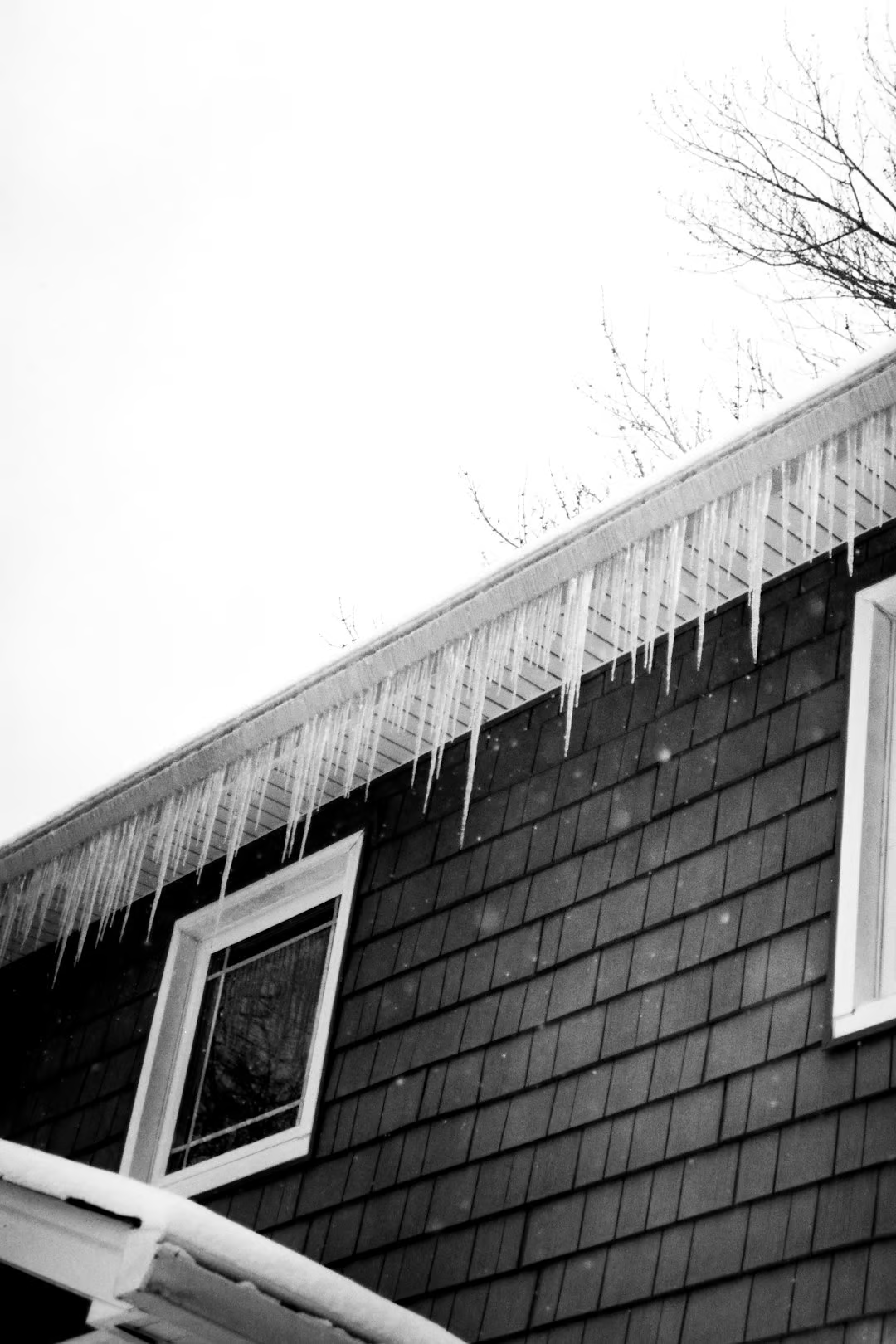
Ice dams form because heat escaping from your living space into the attic melts snow on the upper roof. That water runs down to the cold eaves and refreezes there. The gutter is where you see the result — icicles, ice filling the trough — but it is not the cause. Cover the gutter and the same ice still forms on the roof edge above it.
Some guards make winter slightly better by keeping the gutter clear so meltwater can drain when temperatures rise. Some solid covers make it slightly worse by giving ice a broader surface to bond to. Neither effect is large. If you get ice at your eaves every February, the answer is air sealing, insulation, and ventilation — not gutter covers. We cover that in detail in our guide to ice dams in New Hampshire and Maine.
Be wary of anyone selling guards as an ice dam solution. It is not what they do.
When Guards Are Genuinely Worth It
- Heavy tree cover. If you are cleaning gutters twice a year or more, guards will pay for themselves in time and hassle.
- A tall or steep house. The real cost of gutter cleaning is not the labour, it is the ladder. If reaching your gutters means a two-storey ladder on uneven ground, reducing that to once every few years is worth a lot.
- You are replacing gutters anyway. Adding guards during a gutter installation costs far less than retrofitting later.
- Chronic overflow problems. Water spilling behind gutters rots fascia and soaks foundations. If clogs are causing that, solving it is not optional.
When They Are Not
- An open lot with no overhanging trees. If your gutters stay clean, you are solving a problem you do not have.
- Gutters that are failing anyway. Putting guards on sagging, leaking, or badly pitched gutters is money on top of a problem. Fix the gutters first.
- A roof near the end of its life. If you are replacing the roof in the next couple of years, wait and do both together.
A Few Practical Notes
Installation matters as much as product choice. Guards that are fitted under the shingles can interfere with the roof’s water management and, on some roofs, affect the shingle warranty. We prefer methods that attach to the gutter rather than lifting shingle courses.
Check the gutters themselves before covering them. Pitch, hanger spacing, and downspout capacity all determine whether water actually leaves the system. A guard on an undersized gutter just moves the overflow somewhere else.
And be realistic about warranties. Long guarantees on gutter guards typically cover the product, not the cost of someone coming out to clear it. Read what is actually promised.
The Short Version
On a wooded New Hampshire lot, good micro-mesh guards are usually worth it — not because they end maintenance, but because they turn a twice-yearly ladder job into an occasional one and keep water moving away from your foundation. Under pines specifically, mesh size is the deciding factor.
What they will not do is stop ice dams, and any pitch that claims otherwise is one to walk away from.
If you would like someone to look at your gutters and tell you honestly whether guards make sense for your house, get in touch. We install gutters and gutter guards throughout southern New Hampshire and Maine, and estimates are free.