
Ice dams are the most common cause of winter roof leaks in New Hampshire and Maine, and they arrive fast. A week of sunny afternoons and freezing nights is enough to build a ridge of ice along your eaves thick enough to back water up under the shingles and into your ceilings. Tall Pine Roofing removes ice dams safely and, more importantly, fixes the reason they keep coming back.
How We Remove Ice Dams
Our approach is straightforward and deliberately gentle on your roof: we clear the snow that is feeding the dam, and we treat the ice to reopen a drainage path.
1. Clear the snow
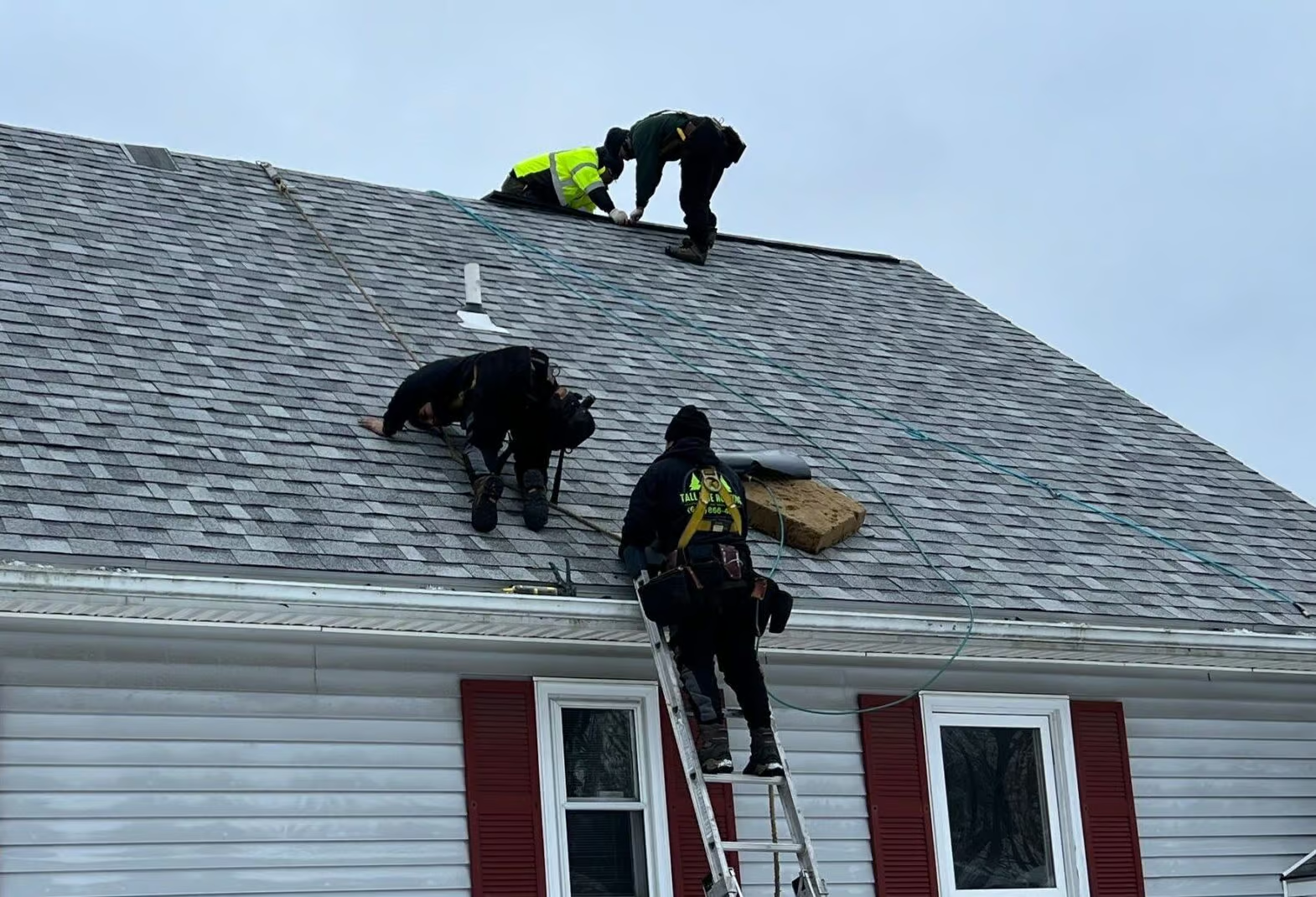
An ice dam only grows while there is snow above it to melt. Removing the snow from the lower portion of the roof cuts off the supply. We clear it carefully, leaving a protective layer rather than scraping down to the shingles, and we work from ladders and the ground with proper equipment rather than walking a frozen roof.
2. Treat the ice
We apply de-icing treatment to the dam itself to melt channels through it, so the water trapped behind has somewhere to go. That is what stops the leak — relieving the standing water sitting on your shingles. Treatment keeps working after we leave, and on a heavy dam it may take more than one visit.
What we will not do
We do not chip, hack, pry or hammer at ice. Shingles are brittle in the cold, and breaking ice off a roof takes granules, shingle edges and sometimes the underlayment with it — turning a seasonal problem into a permanent leak. We do not use pressure washers or open flame either. Plenty of ice comes off roofs every winter along with the roof itself, and we are not interested in being the reason.
If your ceiling is actively leaking, tell us when you call. Relieving water behind the dam is the priority, and interior protection comes first.
Removal Is the Emergency. Prevention Is the Fix.
Here is the part most homeowners do not hear until the third winter in a row: ice dams are not really a roofing problem. They are a heat problem.
Warm air escapes from your living space into the attic. It heats the underside of the roof deck, and snow on the upper roof melts even when it is well below freezing outside. That water runs down to the eaves, which hang past your heated walls and stay cold, and it refreezes. Repeat for a week and you have a dam.
Removing the dam solves today. It does not change why it formed. If you are calling someone out every February, the money is better spent on the cause.
The permanent fixes
- Air sealing — the step most often skipped, and usually the highest value. Recessed lights, bath fans, plumbing and wiring penetrations, chimney chases and the attic hatch all leak warm air upward. Insulation slows heat; it does not stop air moving through gaps.
- Insulation depth — current recommendations for this climate call for considerably more than was standard when most New Hampshire and Maine homes were built, with particular attention at the perimeter where the attic floor meets the eaves.
- Ventilation — cold air in at the soffits, out at the ridge, flushing any heat that does get through. A ridge vent with blocked soffits does nothing.
- Ice-and-water barrier — a self-adhering membrane at the eaves and in valleys that seals around fasteners, so water backing up behind a dam cannot reach the deck. It can only be installed under the shingles, which makes it part of a roof replacement rather than a standalone repair.
If your roof is nearing the end of its life anyway, that last point is a strong argument against stretching it one more winter. Our guide to ice dams in New Hampshire and Maine walks through all of this in detail.
Ice Dam FAQs
Water Is Coming Through My Ceiling Right Now. What Do I Do?
Put something down to catch the water and move anything valuable. If the ceiling is bulging, a small hole at the low point lets the water drain in a controlled way rather than bringing the whole section down. Then call us and say it is an active leak — that changes how we prioritise it. Do not go up on the roof yourself.
Can I Just Knock the Ice Off Myself?
Please do not. More people are hurt dealing with ice dams than by the dams themselves — ladders on frozen ground against an icy eave is how it happens. And chipping at ice cracks cold shingles and tears the underlayment underneath, which converts a winter nuisance into a year-round leak. If you want to do something safely from the ground, a long-handled roof rake pulling snow off the bottom few feet of roof is genuinely useful.
Will Removing the Dam Stop It Coming Back?
No, and we would rather say so. Removal protects your house this week. The dam forms because heat is escaping into your attic, and until that is addressed it will form again with the next thaw-freeze cycle. We will look at the attic while we are there and tell you what is actually driving it.
Does Homeowners Insurance Cover This?
Policies often cover the resulting interior water damage, but typically will not pay to correct the underlying cause — the insulation, ventilation and roofing work that stops it recurring. Check your own policy. Photograph the damage and the ice before anything is cleared, since that documentation helps a claim.
Serving Southern New Hampshire and Maine
We are a family-owned contractor based at 43 North Road in Deerfield, NH, working throughout Rockingham, Merrimack and Strafford counties and into southern Maine. We are an Owens Corning Preferred Contractor, fully insured, and we back roofing installations with a 25-year transferable workmanship guarantee.
The best time to deal with ice dams is before winter, while an attic inspection is straightforward and the work can be scheduled without weather delays. If you have had ice at your eaves before, it is worth a look now.